0%

Table of Contents

Look, I’ve been running around construction sites for, well, too long to count. And you know what’s been buzzing lately? Everyone's obsessed with prefabrication. Not exactly new, but the scale… it's different now. They want everything modular, quick to assemble. And that puts a lot of pressure on welded wire mesh manufacturers. Because, let’s be honest, a lot of these systems lean heavily on good, solid mesh.

It’s funny, you spend all this time designing something beautiful in the office, and then you get on site and… reality hits. I’ve seen so many designs that looked perfect on paper, but then the guys installing it are cursing because the tolerances are off, or the mesh is too flimsy. It's not about making things fancy, it’s about making things work.

And these pre-fab companies, they’re always pushing the boundaries. Strangely, sometimes pushing too hard. They want thinner wire, different coatings, exotic alloys… thinking they’ll save a buck. Anyway, I think they're forgetting the basics.
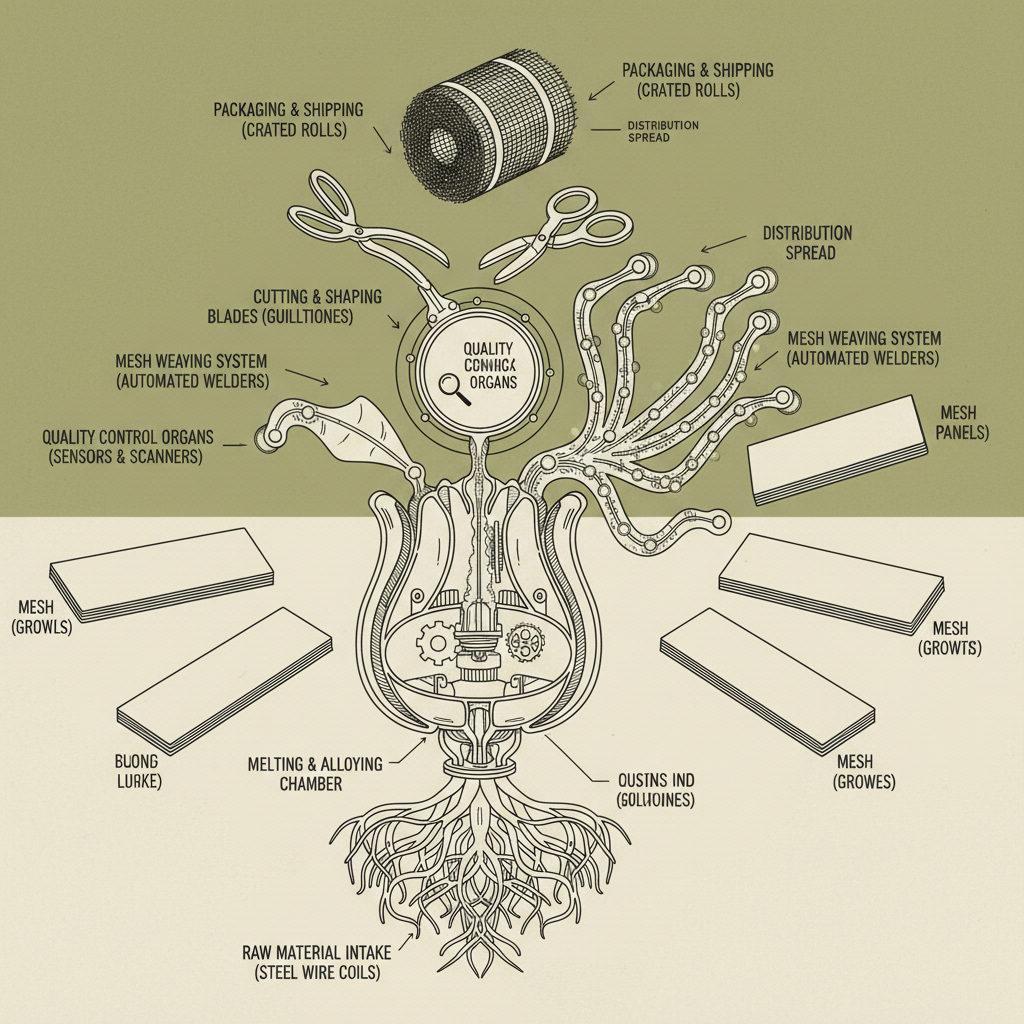
Navigating Prefabrication Challenges with Reliable Welded Wire Mesh Manufacturers

Industry Trends and Design Pitfalls

Navigating Prefabrication Challenges with Reliable Welded Wire Mesh Manufacturers

Honestly, the push for lighter-weight mesh is driving me crazy. I encountered this at a pre-fab wall panel factory last time. They were using this super-thin gauge stuff, claiming it saved them a fortune. It looked… sad. And the welders were having a nightmare getting a consistent join. Have you noticed how much difference the coating makes, too? PVC's okay for general use, but if you’re dealing with anything corrosive, you need epoxy or galvanizing. Proper galvanizing, mind you - not that cheap, thin stuff that flakes off after a year.

The biggest pitfall? Over-engineering the mesh and under-engineering the connections. The mesh itself can be incredibly strong, but if the welds are weak, or the framing system doesn't distribute the load properly… it all falls apart. And believe me, it does fall apart.

Materials: The Feel of Quality

Now, I’m an old-school guy. Give me good, solid low carbon steel any day. You can feel the quality. It's got a weight to it. Stainless steel, of course, is great for corrosion resistance, but it’s a pain to weld – always need that extra TIG setup and skilled welders which cost money. And you can smell the difference too when cutting or grinding – the steel has a distinct metallic aroma. It’s the small things, you know?

Galvanized mesh… that's a workhorse. You can leave it out in the elements for years and it won’t rust to dust. But it’s heavy. And the zinc coating can get chipped, especially during handling. That’s why I prefer epoxy coated. More durable, but more expensive.

They're experimenting with fiberglass reinforced polymer (FRP) mesh now, too. Light as a feather, supposedly super strong. But I haven't seen enough long-term data to trust it fully. It feels… wrong, somehow. Like it’s going to snap unexpectedly. It lacks the tactile feedback you get with metal.

Real-World Testing & User Applications

Forget the lab tests. The real test is what happens when a forklift runs into it, or a guy drops a concrete block on it. I’ve seen mesh fail under surprisingly little stress. The welded wire mesh manufacturers who actually understand construction send their samples to sites for abuse testing. They let the guys on the ground beat it up. That’s the only way to truly assess its durability.

I've seen it used for everything – reinforcement in pre-cast concrete, security fencing, animal enclosures, even as a substrate for green walls. The green wall application is interesting because the mesh needs to be strong enough to support the weight of the soil and plants, but also allow for proper drainage. It's a delicate balance.

You’d think people would use it as intended, but… they don’t always. I saw a guy using mesh as a makeshift shelf in his trailer once. A shelf! I asked him why, and he said it was the only thing he had that was strong enough. It wasn’t designed for that, but it held. Strangely enough.

Advantages, Disadvantages, and Customization

The big advantage of welded wire mesh is, obviously, its strength-to-weight ratio. It’s strong, but it’s not overly heavy. It’s also relatively inexpensive, especially compared to other reinforcing materials. It's easily cut and formed, making it adaptable to different shapes and sizes. And that’s where customization comes in.

But it's not perfect. Corrosion is always a concern, especially in coastal environments. And it can be susceptible to deformation if it’s not properly supported. Sometimes the mesh itself isn't the problem, it's how it's integrated into the overall structure. We had a job last year where the client wanted a specific mesh size that wasn’t standard. They needed it for a curved wall, and the standard sizes just wouldn’t work. The manufacturers were able to customize it for them, but it added a significant cost and lead time.

Welded Wire Mesh Performance Attributes


Case Study: The Debacle

Last month, that small boss in Shenzhen who makes smart home devices insisted on changing the interface to for the enclosures, and the result was a complete disaster. He wanted a sleek, modern look, said it would attract more customers. The problem? He didn’t realize the port needed a ground plane, and the mesh wasn't designed to accommodate it. It caused all sorts of electrical interference. He ended up scrapping a whole batch of enclosures. A simple mistake, but costly. Anyway, I think he learned his lesson.

He'd rushed the design, not consulting with anyone who actually understood electromagnetic compatibility. Classic rookie mistake. I tried to warn him, but he wouldn’t listen. He wanted what he wanted. Later… Forget it, I won’t mention it.

Performance Metrics - The Notebook View

So, how do we actually measure this stuff? I’m not talking about fancy lab reports. I’m talking about what matters on the job site. We use a simple little table, scribbled in a notebook, to track key metrics. It’s not pretty, but it gets the job done.

We look at tensile strength, of course. But also elongation – how much the mesh can stretch before it breaks. And shear strength – how well it resists forces trying to tear it apart. And then there's the coating thickness. You can measure that with a simple gauge.

Honestly, the biggest indicator of quality is just… experience. You learn to recognize good mesh when you see it. It feels right. It looks right. And it performs right.

Summary of Key Performance Indicators for Welded Wire Mesh

Metric Units Acceptable Range On-Site Assessment
Tensile Strength MPa >400 Visual inspection for breaks during bending
Elongation % >12 Check for significant plastic deformation
Coating Thickness μm >50 (for galvanized) Scratch test for coating integrity
Weld Shear Strength MPa >300 Pull test on welded joints
Corrosion Resistance Hours to Red Rust >240 Visual inspection after salt spray test
Dimensional Accuracy mm +/- 1 Measure mesh opening with calipers

FAQS

What’s the best type of welded wire mesh for a retaining wall?

For a retaining wall, you really want something heavy-duty. Galvanized or epoxy-coated low carbon steel, with a relatively small mesh size – say 100mm x 100mm or even smaller – is a good bet. You need the strength to withstand the soil pressure, and the coating to prevent corrosion. Don’t skimp on the gauge of the wire either; go for something substantial. The bigger the wall, the beefier the mesh needs to be. It's not worth trying to save a few bucks here – a failure could be catastrophic.

How do you properly store welded wire mesh to prevent rust?

Storage is key! Don't just leave it lying around in the rain. If possible, store it indoors, in a dry, well-ventilated area. If outdoor storage is unavoidable, cover it with a waterproof tarp. Make sure the tarp doesn’t trap moisture underneath. Elevate it off the ground on pallets to allow air circulation. And don't stack it too high – you don't want to crush the mesh. It's simple stuff, but it makes a big difference.

What’s the difference between galvanized and epoxy-coated mesh?

Galvanizing is basically coating the steel with a layer of zinc to protect it from rust. It’s good, reliable, and relatively inexpensive. Epoxy coating is a more durable option, offering better resistance to abrasion and corrosion. It’s also more expensive. Galvanized is fine for most applications, but if you’re dealing with harsh environments – saltwater, chemicals – epoxy is the way to go. And honestly, the feel of a well done epoxy coating is so much smoother.

How do you ensure proper welding of welded wire mesh?

Welding mesh properly is crucial. You need skilled welders, the right equipment (MIG or TIG, depending on the material), and proper technique. The weld needs to be strong, consistent, and free of defects. We always do spot checks on the welds to ensure they meet our standards. And make sure the surface is clean before welding – any dirt or grease will weaken the weld. It's the small details that matter.

Can welded wire mesh be recycled?

Yes, absolutely! Steel is highly recyclable. In fact, it's one of the most recycled materials in the world. You can scrap the mesh at the end of its life, and it can be melted down and reused. It’s a sustainable option, and it helps reduce waste. Just make sure to remove any non-metallic components – plastic coatings, for example – before sending it to the scrapyard.

What’s the typical lead time for custom welded wire mesh orders?

Lead times vary, but typically it’s around 2-4 weeks for custom orders. It depends on the complexity of the design, the quantity needed, and the manufacturer’s current workload. The more unusual the specifications, the longer it will take. It's always best to plan ahead and place your order well in advance, especially if you have a tight deadline. Don't wait until the last minute!

Conclusion

So, there you have it. Welded wire mesh – it's not glamorous, but it's essential. It's the backbone of a lot of modern construction, and when done right, it provides strength, durability, and reliability. We've talked about trends, materials, testing, and customization, but at the end of the day, it all comes down to quality and attention to detail.

Ultimately, whether this thing works or not, the worker will know the moment he tightens the screw. If it feels solid, if it holds its shape, if it looks right… then you know you’ve got a good piece of mesh. And that’s all that really matters. If you’re looking for a reliable welded wire mesh manufacturer, give them a call. Tell 'em I sent ya.

Daniel Wilson

Daniel Wilson

Daniel Wilson is a Quality Control Supervisor at Hebei Yisizhe Manufacture (Group) Limited. He is responsible for implementing and overseeing the company’s rigorous quality control procedures, ensuring that all products meet the highest standards before leaving the factory. Daniel joined Yisizhe in 2015 and has a keen eye for detail
Previous Expert Stainless Steel Wire Mesh Manufacturers Insights and Practical Applications
Next Navigating Wire Mesh Manufacturing Trends and Material Selection Expertise