Selecting the right reinforcement materials for large-scale perimeter projects often comes down to a critical decision: choosing between rigid panels and flexible rolls. While panels offer immediate structural rigidity, the versatility of rolled mesh allows for seamless adaptation to uneven terrains and complex geometries.
In the industrial and agricultural sectors, the shift toward high-tensile, corrosion-resistant materials has redefined how boundaries are secured. The ability to procure materials that balance tensile strength with ease of installation is now a primary driver for project efficiency and long-term maintenance costs.
Whether you are securing a commercial warehouse or designing a residential garden, understanding the technical specifications of weld mesh rolls suppliers is essential for ensuring the structural integrity of your installation.


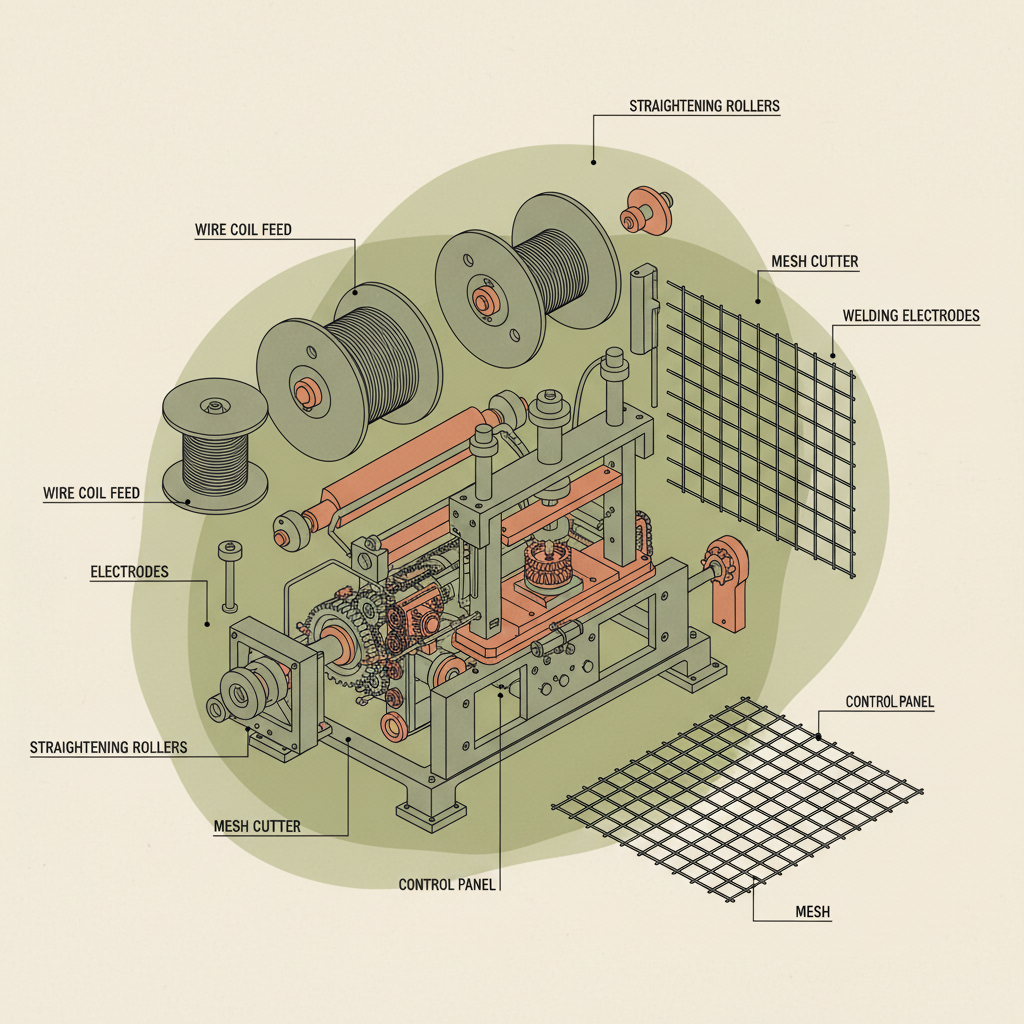
Welded mesh rolls are engineered by fusing longitudinal and transverse wires through electrical resistance welding. Unlike woven mesh, where wires are interlaced, the welded approach creates a rigid, fixed grid that prevents the "shifting" of apertures, making it ideal for security and structural support.
The roll format specifically addresses the logistics of large-scale deployment. By providing the mesh in rolls, manufacturers enable installers to cover vast distances without the interruptions caused by panel joints, reducing the number of fasteners required and minimizing potential points of failure.
When evaluating mesh quality, tensile strength is the most critical metric. For instance, professional-grade products often feature line wire tensile strengths between 450–550N/mm² and cross wire strengths reaching 600–700N/mm². This variance ensures that the mesh can withstand both longitudinal tension during installation and lateral impact during use.
Mesh aperture size, such as the common 50x60mm grid, must be balanced against the intended purpose. Smaller apertures are required for pet containment or high-security zones to prevent intrusion, while larger apertures are utilized in agricultural settings to maximize airflow and sunlight penetration.
Material consistency is another key factor. The use of low-carbon steel combined with precise welding temperatures prevents the wire from becoming brittle at the weld point, ensuring that the roll can be unspooled and bent without cracking the core metal.
Metal mesh is inherently susceptible to oxidation, especially in coastal or industrial environments. To mitigate this, a multi-layered protection strategy is typically employed, starting with a hot-dip galvanized core that provides a sacrificial zinc layer to protect the steel.
The combination of a galvanized core and a powder coating (such as RAL6005 green) creates a dual-barrier system that significantly extends the service life of the mesh by preventing moisture from reaching the base metal.
Beyond protection, powder coating offers aesthetic flexibility. For residential and park settings, the green RAL6005 finish allows security barriers to blend into the natural landscape, transforming a functional security tool into a visually unobtrusive design element.
Different environments demand different performance priorities. In industrial settings, impact resistance and tensile strength are paramount to prevent breach. In contrast, residential applications prioritize a balance between safety and aesthetics, while agricultural use focuses on corrosion resistance and cost-efficiency.
By analyzing the relative importance of these factors, we can determine the most suitable mesh configuration. For example, a pet enclosure requires tighter apertures and smooth finishes to prevent injury, whereas a highway fence requires high rigidity to withstand wind pressure.
A typical industrial scenario involves the installation of mesh rolls along a sprawling perimeter where the ground is uneven. In this case, the flexible nature of the roll allows the installer to follow the contour of the land more effectively than rigid panels, which would require extensive digging or stepping.
For residential pet containment, the focus shifts to the "safe haven" concept. Using a 1.0m height mesh with a tight 50x60mm grid ensures that medium-sized dogs cannot squeeze through, while the powder coating prevents sharp edges from causing scratches. This demonstrates how the same base technology can be adapted from a security barrier to a safety enclosure.
The industry is moving toward "Smart Perimeter" integration. We are seeing a trend where traditional welded mesh is paired with fiber-optic sensors or AI-driven camera systems. This transformation turns a passive physical barrier into an active security network capable of detecting intrusions in real-time.
Environmental sustainability is also influencing material choice. There is an increasing demand for coatings that are VOC-free and production processes that reduce the carbon footprint of galvanization. Manufacturers are exploring more efficient electro-welding techniques to reduce energy consumption during the fusion process.
Customization is becoming the norm rather than the exception. Buyers no longer accept standard dimensions; instead, they request tailored height-to-aperture ratios and specific color palettes to match architectural requirements, pushing suppliers to adopt more modular production lines.
Procuring mesh requires a systematic approach to avoid over-spending on unnecessary specs or under-specifying for a critical environment. The first step is identifying the "Primary Threat" (e.g., corrosion, animal intrusion, or human trespass), which then dictates the coating and aperture requirements.
The second step involves evaluating the installation environment. If the terrain is flat and requires extreme rigidity, panels are superior. However, for expansive areas with variable topography, rolls from experienced weld mesh rolls suppliers are the most cost-effective and structurally sound choice.
Finally, the trade-off between initial cost and maintenance must be analyzed. A cheaper, uncoated mesh may save budget today but will require full replacement in three years, whereas a galvanized and powder-coated system offers a decade of stability.
| Scenario | Critical Factor | Recommended Spec | Suitability Index |
|---|---|---|---|
| Coastal Zone | Corrosion Resistance | Hot-dip Galv + PVC | High |
| Industrial Perimeter | Tensile Strength | High-Tensile Steel | High |
| Residential Garden | Aesthetics/Safety | RAL6005 Powder Coated | High |
| Poultry Farm | Aperture Size | Tight Grid (Hex/Weld) | Medium |
| Highway Barrier | Wind Resistance | Heavy Gauge Wire | High |
| Temporary Site | Ease of Setup | Lightweight Roll | Medium |
Welded mesh is created by fusing wires together at every intersection using electrical resistance welding, creating a rigid, fixed structure. Woven mesh is made by interlacing wires over and under each other. The result is that welded mesh provides superior structural stability and maintains a consistent aperture size, whereas woven mesh is more flexible but can be deformed or "pushed" apart under pressure.
Wire gauge selection depends on the expected impact load and the height of the fence. For high-security perimeters, a thicker gauge is required to prevent cutting or bending. You should evaluate the tensile strength (e.g., 450-700N/mm²) and ensure the wire diameter is sufficient to prevent sagging over the span between support posts. Heavier gauges are essential for industrial zones, while lighter gauges suffice for residential boundaries.
Yes, they are highly suitable for DIY. Because they are supplied in rolls, they can be easily transported and unrolled along the fence line. Most systems use a simple "post-and-clamp" method where the mesh is secured to pre-installed steel posts using brackets. This removes the need for specialized welding equipment on-site, making it accessible for homeowners securing gardens or small business owners creating partitioned areas.
In high-salinity or humid environments, a dual-protection system is best: a hot-dip galvanized core topped with a PVC or powder coating. The galvanization provides the primary chemical defense against rust, while the outer polymer layer acts as a physical shield against salt spray and moisture. This combination prevents the "creep" corrosion that often occurs at the weld points of single-layer coated meshes.
Aperture size is the deciding factor in whether a pet can escape or get injured. For small animals like rabbits or poultry, a tight mesh is required. For dogs, a standard 50x60mm grid is usually sufficient to prevent them from squeezing through while maintaining visibility. It is critical to ensure that the apertures are uniform; any gaps caused by poor welding can create "weak spots" where pets might push through or get their paws caught.
Under normal outdoor conditions, a high-quality powder-coated galvanized mesh can last between 10 to 25 years. The lifespan depends heavily on the thickness of the zinc layer and the quality of the powder application. Regular inspections for scratches in the coating are recommended; if the base metal is exposed, a simple touch-up with zinc-rich paint can prevent localized rust from spreading and further extending the fence's life.
The transition from standard fencing to engineered welded mesh rolls represents a move toward efficiency and long-term reliability. By prioritizing technical specifications—such as precise tensile strength and dual-layer anti-corrosion coatings—project managers can significantly reduce maintenance overhead while enhancing the security of their perimeters.
Ultimately, the success of a fencing project lies in the alignment between material properties and environmental demands. Whether you are utilizing a flexible roll for a sloping terrain or a rigid grid for industrial containment, choosing a supplier that understands these technical nuances is the only way to guarantee a durable, high-performance boundary.